
Taoist Culture Journey
The Taoist JourneyTemples · Mountains · The Way of Nature
A quieter, more natural China
A Taoist culture journey is not simply “visiting temples”. Its real appeal is that it gathers Chinese philosophy, mountain-and-water aesthetics, traditional architecture, ideas of self-cultivation, folk belief and local ways of life into a single trip. For foreign travellers it shows a China far from the imperial palaces and busy commercial streets: quieter, more natural, and closer to everyday spiritual culture.
Six cultural keywords worth collecting
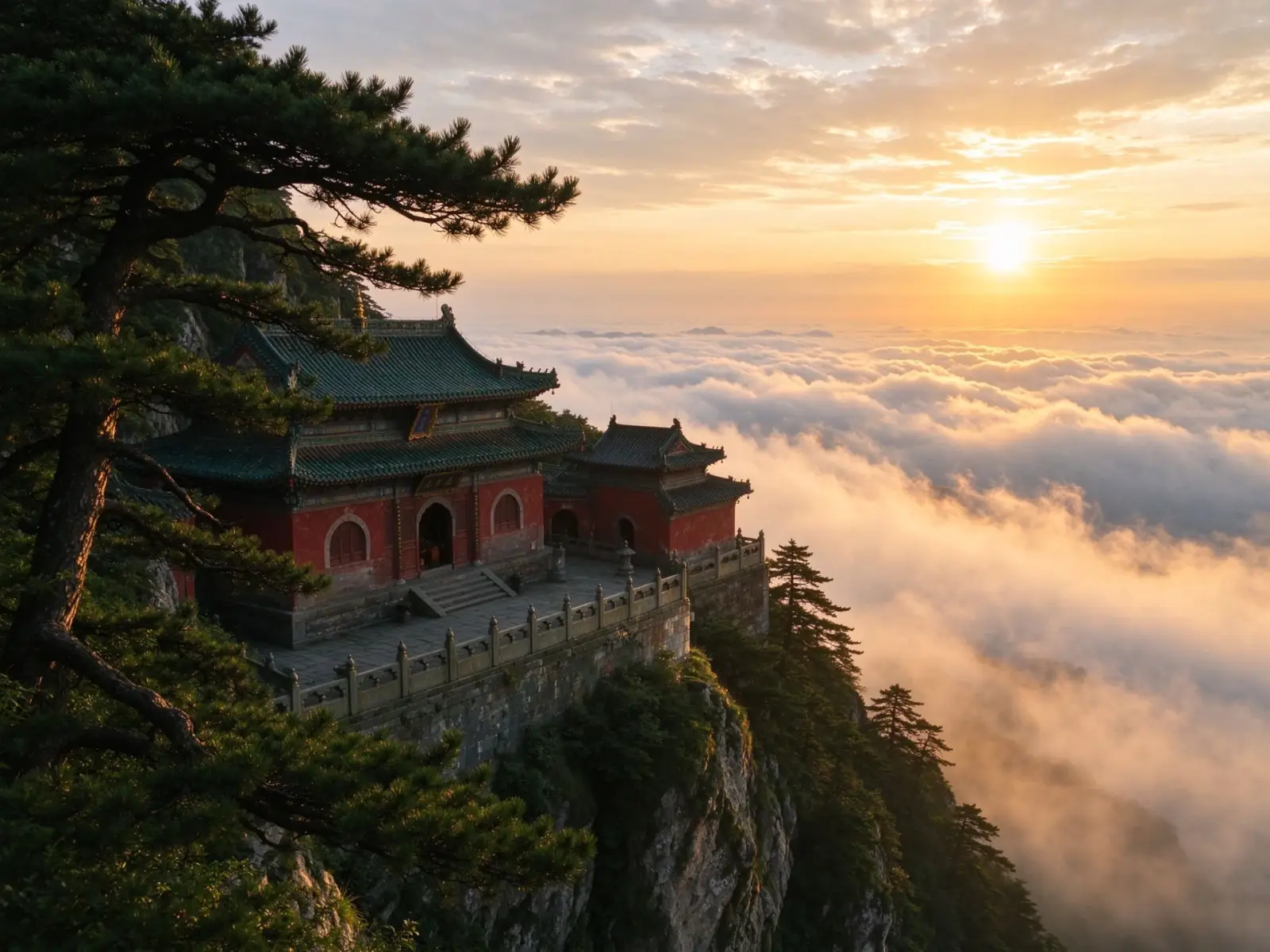
Taoism values living in accord with nature, which is why its most classic temples merge with mountains, forests, valleys and cloud seas.
Qingcheng, Wudang, Qiyun and Luofu combine natural scenery and religious architecture into one complete experience.
Baiyun Temple in Beijing and Qingyang Palace in Chengdu open the Quanzhen tradition; the Celestial Masters’ Mansion on Longhu Mountain is the gateway to Zhengyi Taoism.
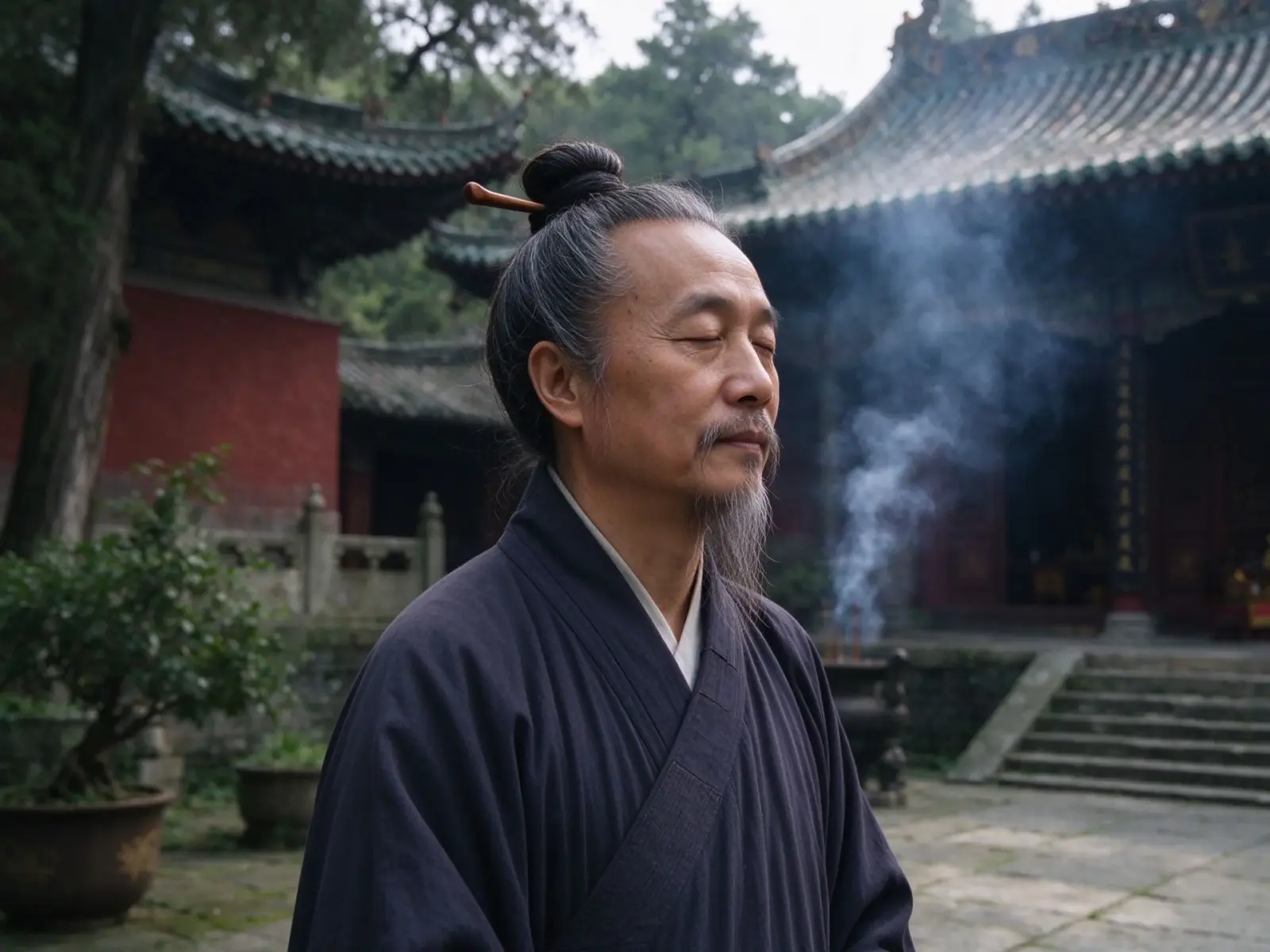
Wudang martial arts, daoyin, meditation and wellness culture are the easiest Taoist extensions for foreign visitors to join and understand.
Taoist music, jiao rituals and festivals reveal the sound, costume and spatial order of the tradition — always observed with respect for its boundaries.
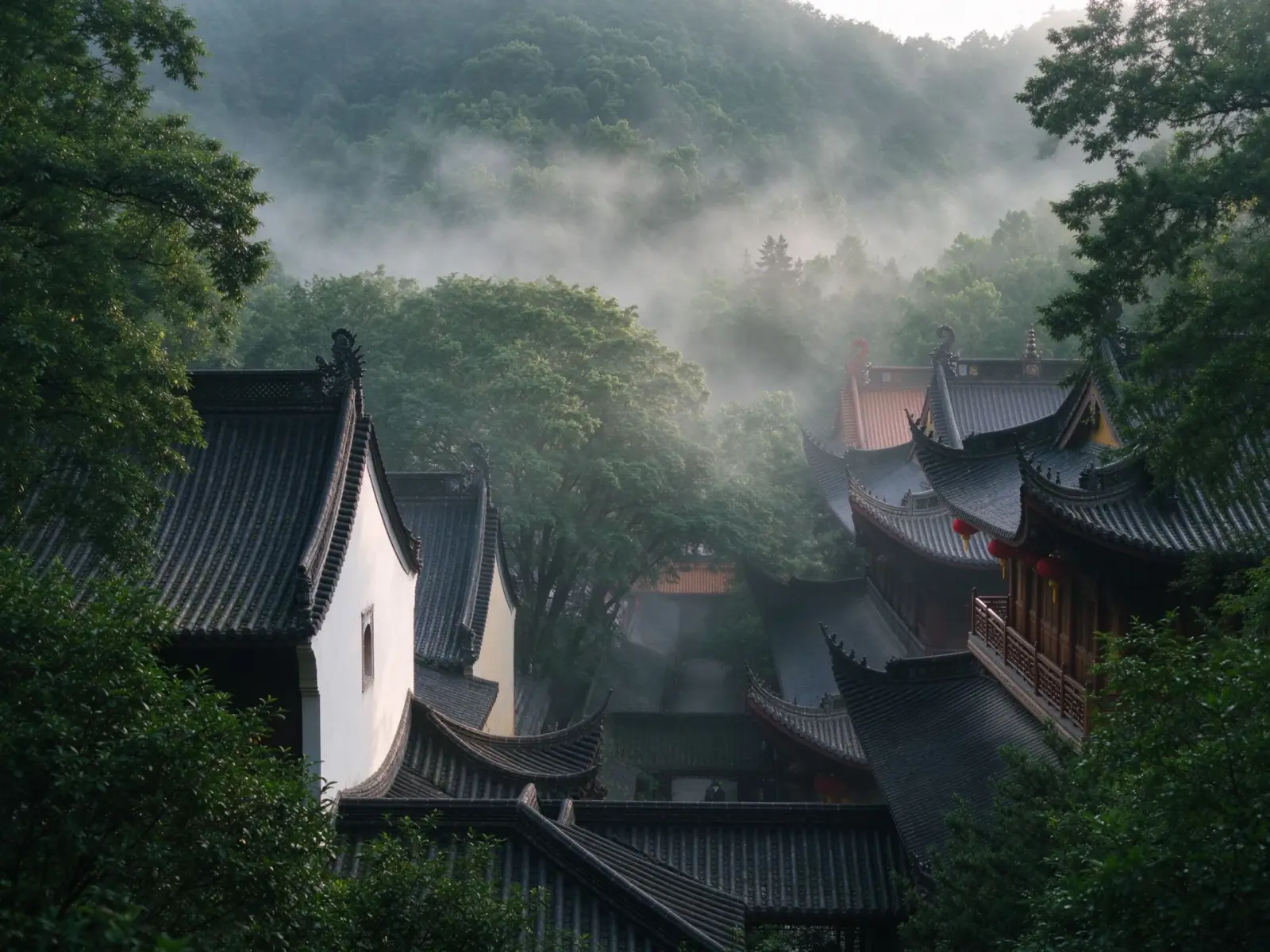
City temples such as Xuanmiao in Suzhou, Sanyuan in Guangzhou and Changchun in Wuhan show that Taoism lives not only in deep mountains but in ordinary urban life.
Three ways into the Way
City Temples & Easy Starts
Convenient in the city · Cultural introduction- Baiyun Temple, Beijing
- Qingyang Palace, Chengdu
- Xuanmiao Temple, Suzhou
Sacred Mountains
Mountain temples · In-depth culture- Qingcheng Mountain
- Wudang Mountain
- Longhu Mountain
Wellness, Folk & Beyond
Self-cultivation · Landscape · Local culture- Luofu Mountain
- Mount Qiyun
- Bixia Temple on Mount Tai
- Sanyuan Palace, Guangzhou
Three ideas before you enter
Taoism & the Natural World
Many foreign visitors reduce Taoism to “immortals, talismans or martial arts”. Its real appeal is broader: it reflects on the balance between people and nature, body and spirit, movement and stillness. What travellers feel most directly is the mountain setting, the layout of the temples, the rhythm of incense, and a quiet way of life.
Quanzhen & Zhengyi
The two great living traditions of Chinese Taoism are Quanzhen and Zhengyi. Quanzhen emphasises monastic residence, discipline and quiet cultivation — seen at Baiyun Temple in Beijing, Qingyang Palace in Chengdu and Changchun Temple in Wuhan. Zhengyi is closely tied to the Celestial Masters lineage, with the Celestial Masters’ Mansion on Longhu Mountain as its most representative destination.
What to Look For Inside
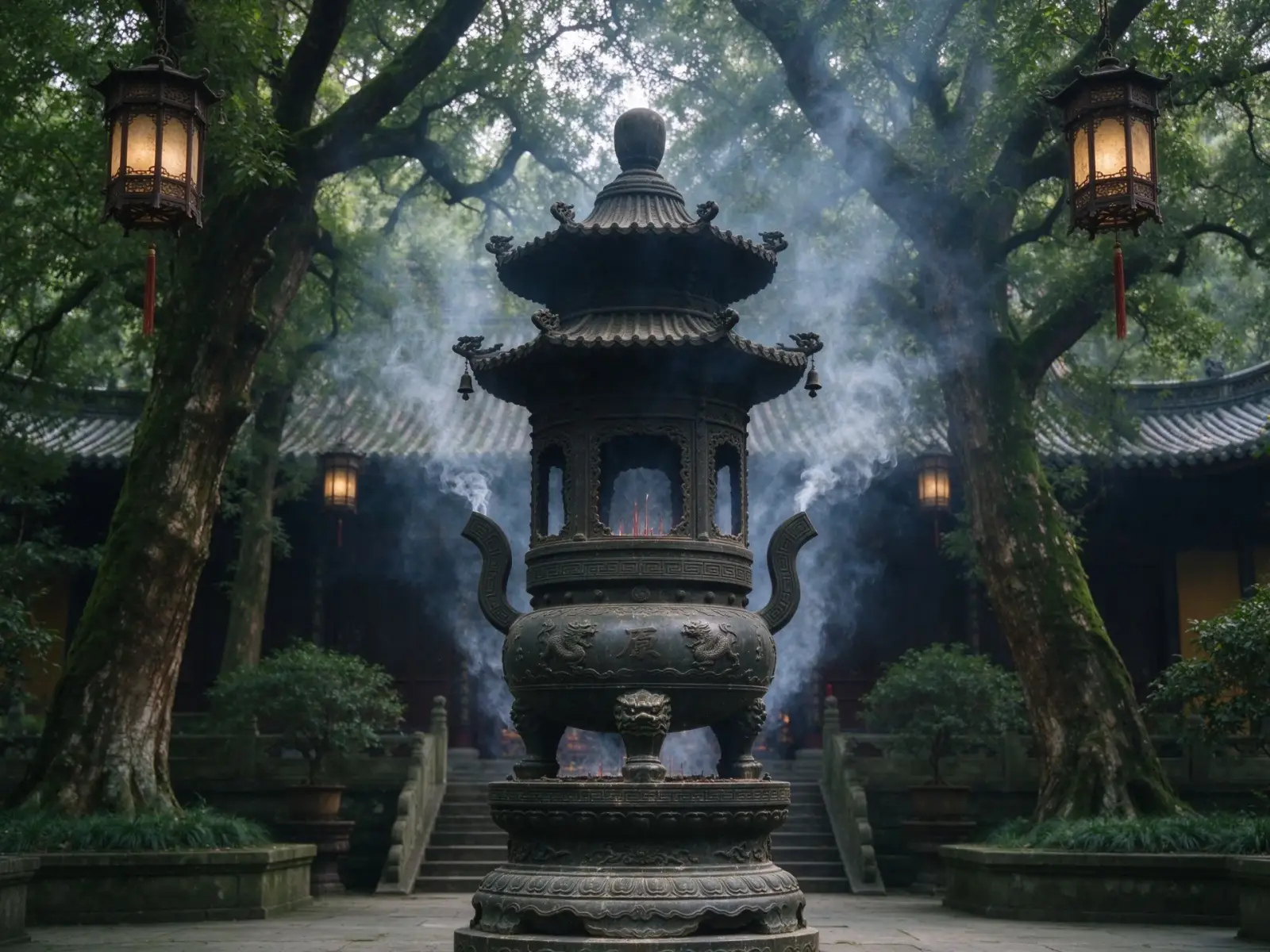
The gate and central axis reveal how a temple deepens space through doors, courtyards and halls. The Hall of the Three Pure Ones introduces the core Taoist pantheon; the bell-and-drum towers and incense burners show daily ritual and time-keeping; steles and plaques hide much of a temple’s history. Best of all is the setting — how the architecture unfolds along terrain, forest and drifting cloud.
Taoism in everyday life
Six urban temples that are the most friendly first experiences — Beijing Baiyun and Dongyue, Chengdu Qingyang, Suzhou Xuanmiao, Guangzhou Sanyuan and Wuhan Changchun. Easy to reach, rich in culture, and perfect for beginning a Taoist journey.
Where temples meet the mountains
The most atmospheric chapter of a Taoist journey: Qingcheng Mountain, Wudang Mountain, Longhu Mountain, Luofu Mountain, Mount Qiyun and Bixia Temple on Mount Tai — where architecture, philosophy and landscape become one.
More than seeing temples
Six experiences that make the journey memorable — tai chi and Wudang martial arts, slow mountain walks, guided temple architecture tours, tea and vegetarian meals, Taoist music and public rituals, and festivals with temple fairs.
Visiting a Taoist temple with respect
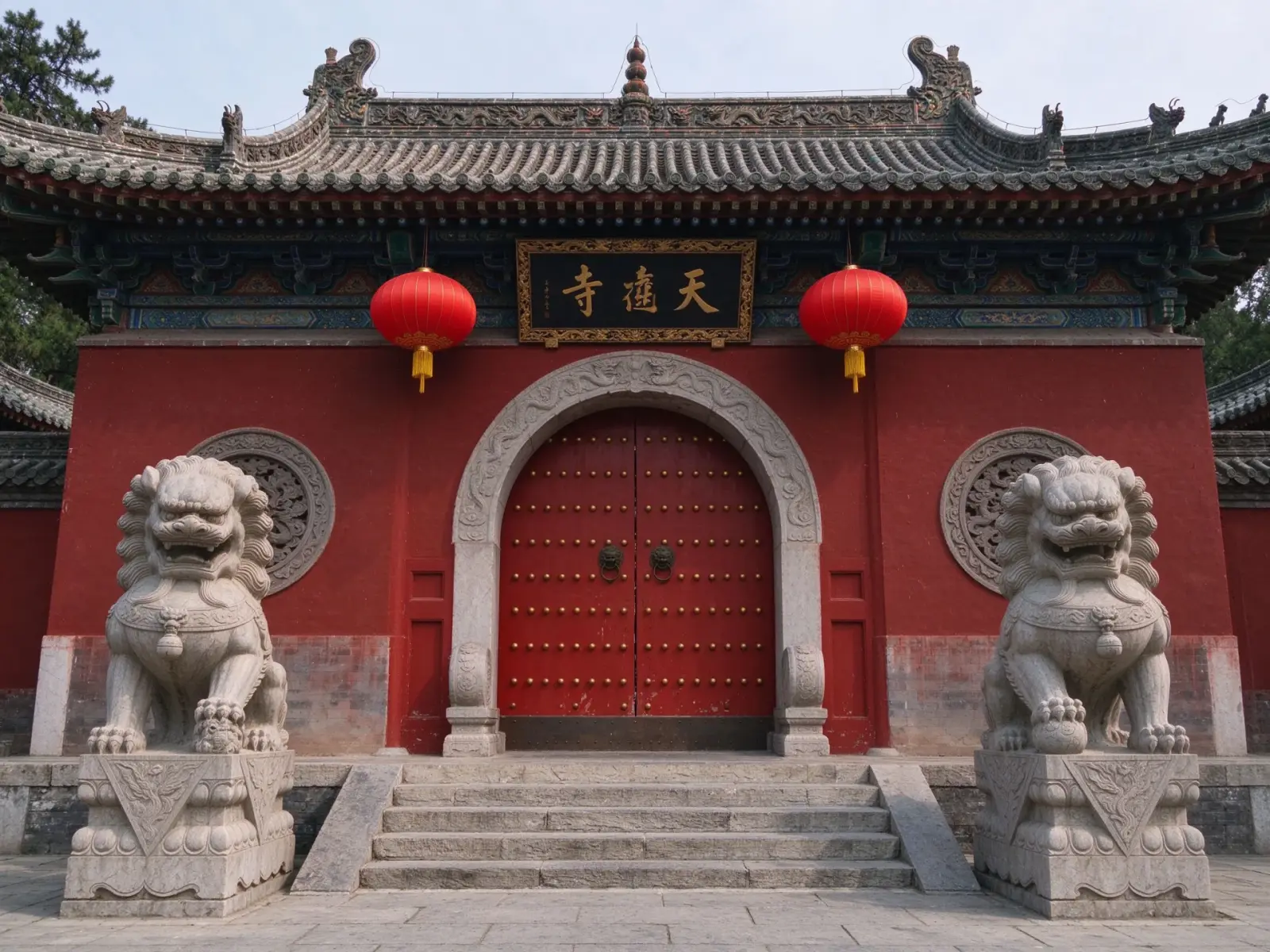
Before you enter
Carry your passport — public scenic areas usually admit foreign visitors under normal rules, but real-name ticketing may need a manual window for foreign documents. Dress neatly (no special costume needed) and wear comfortable shoes for mountain sites. Parts of some temples may close temporarily during major ceremonies, fairs, maintenance, extreme weather or forest-fire periods.
Inside the halls
Do not step on the threshold — cross from its sides. Stay quiet during chanting, rituals and prayers, and do not push close to photograph. Do not touch statues, offering tables or ritual implements; whether photography is allowed follows the on-site signs and staff guidance. You do not need to imitate religious gestures you do not understand — as a visitor, quiet observation is the most appropriate way to take part.
The biggest misunderstanding
A Taoist journey is not about fortune-telling, “immortality practice” or mysterious spells. What is genuinely worth sharing with foreign visitors is Chinese philosophy, landscape aesthetics, architecture, body culture and traditional community life. Keeping the focus on these makes the journey more rewarding — and more respectful of the religion itself.
Five ways to walk the Way
How the editors would start
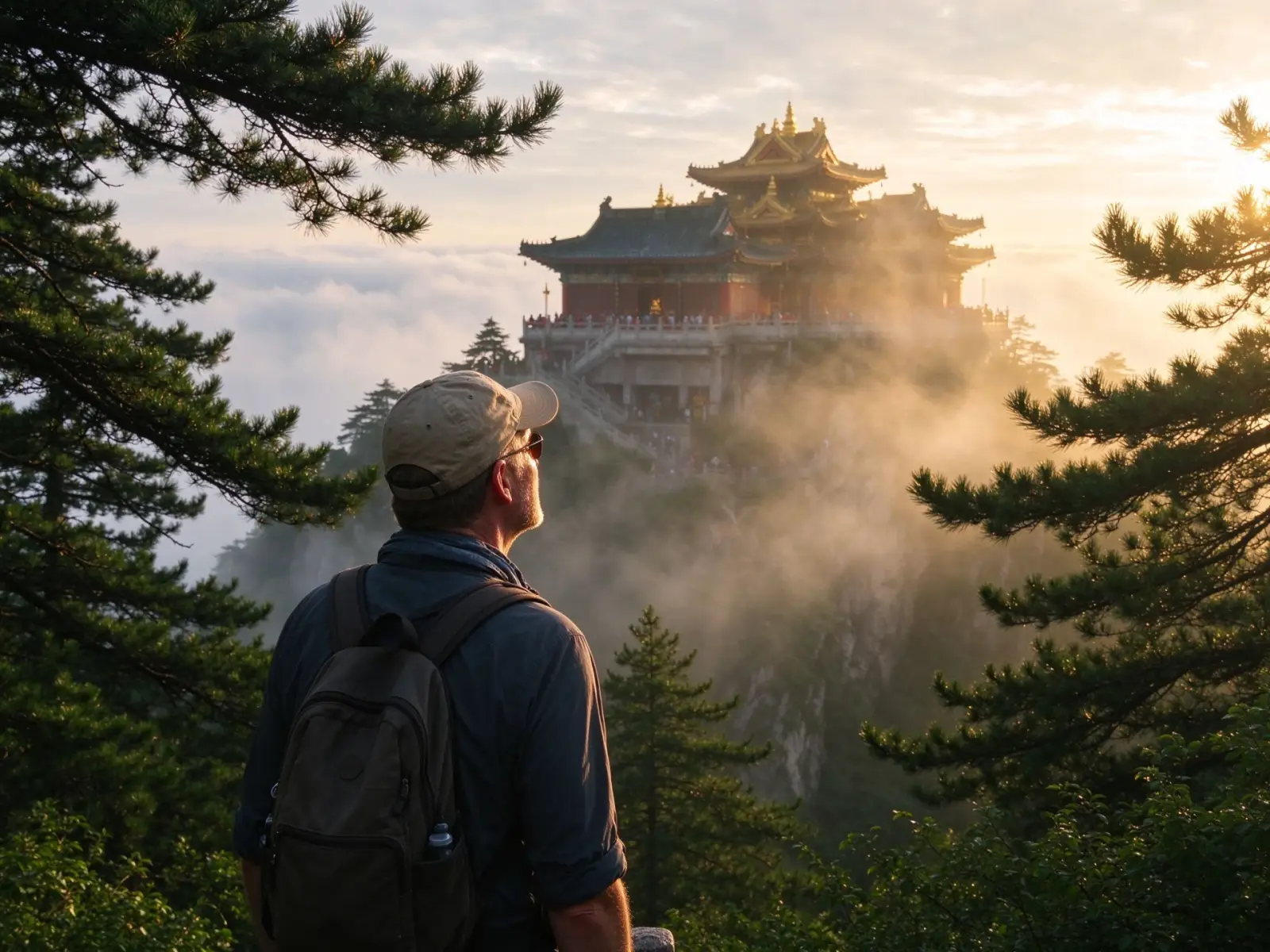
What is truly worth recommending about a Chinese Taoist journey is not “mystery”, but a quieter, more natural way of travelling China. City temples show how tradition still lives inside modern life; sacred mountains fuse architecture, philosophy and landscape into a single whole.
For a first visit, start with Baiyun Temple, Qingyang Palace, Qingcheng Mountain and Wudang Mountain. Travellers seeking deeper culture add Longhu Mountain, Luofu Mountain, Mount Qiyun and Bixia Temple on Mount Tai.
Add one light experience — tai chi, tea, a slow mountain walk, a temple architecture talk or open Taoist music. Then what you remember will not be a single building, but a Chinese way of living. Usually one city temple plus one sacred mountain is enough to give a first-time traveller a complete impression.
A Chinese Taoist journey is not about mystery, but about a quieter, more natural way of seeing China — where city temples keep tradition alive in modern life, sacred mountains blend architecture, philosophy and landscape, and one light experience of tai chi, tea or a slow mountain walk lets you remember not a single building, but a Chinese way of living. 中国道教文化旅行真正值得推荐的,不是神秘感,而是它提供了一种更安静、更自然的中国旅行方式。
Start Your Journey