
Zhangjiajie
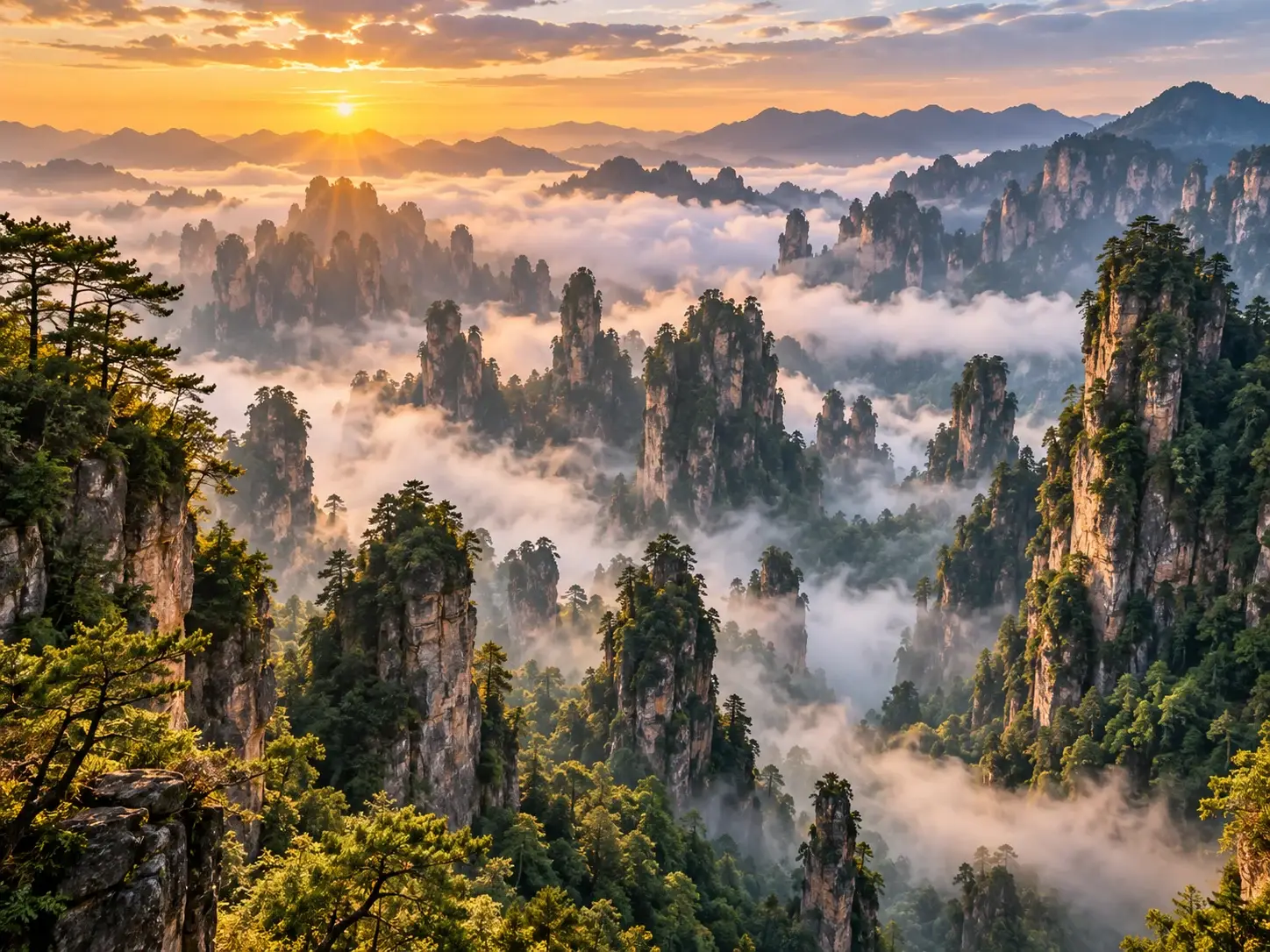
ZhangjiajieA Forest of Peaks Above a Sea of Clouds
Six windows into Zhangjiajie’s mountain world
Zhangjiajie cannot be reduced to a single viewpoint or a single famous peak. Its appeal lies in a layered experience — pillar peaks, a sea of cloud, forested valleys, high-altitude adventure, ethnic villages and an Eastern landscape-painting beauty — where dizzying cliffs, quiet mountain hamlets and mist-wrapped trails all sit within a short journey of one another.
Six travel keywords worth collecting
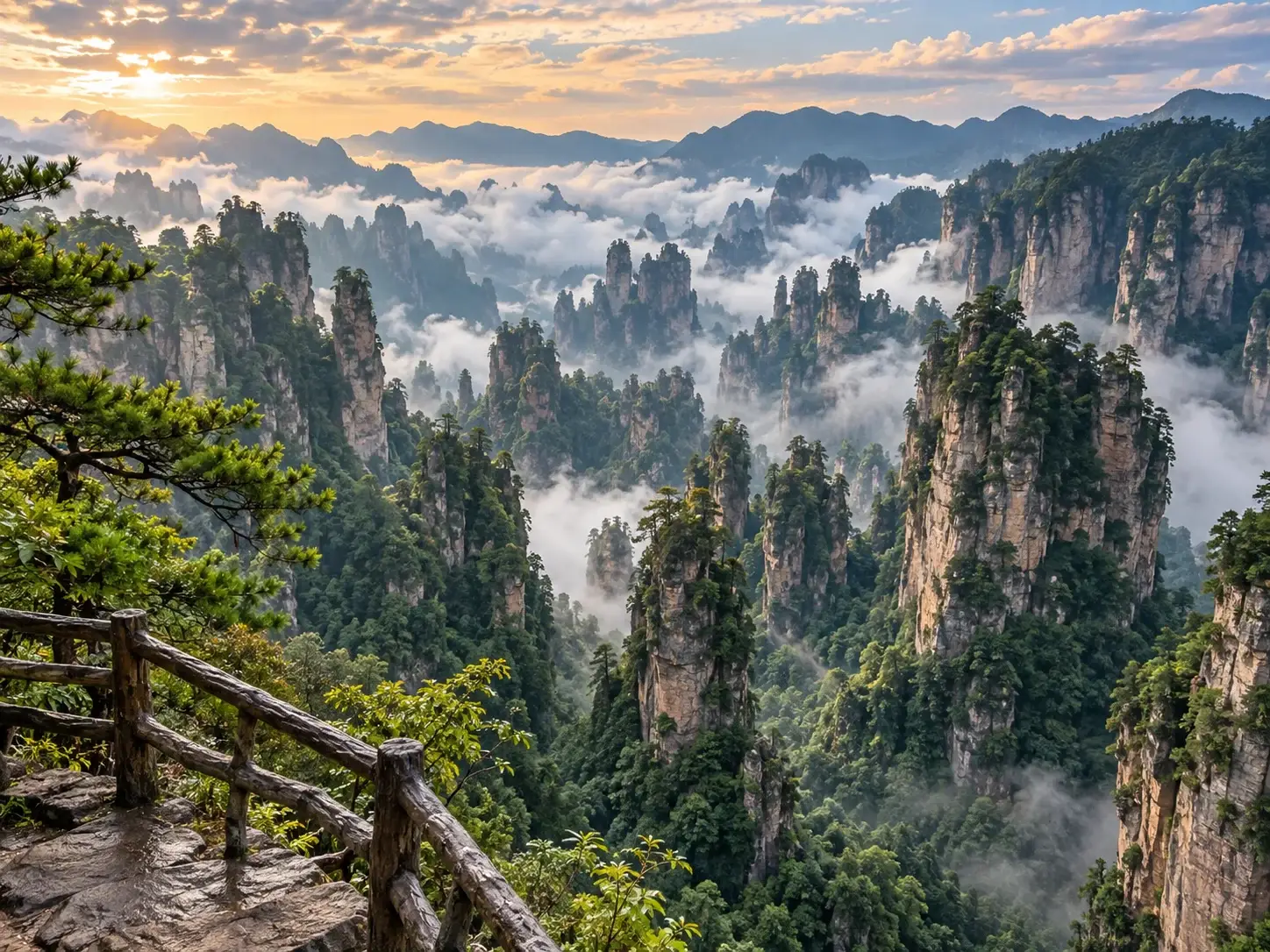
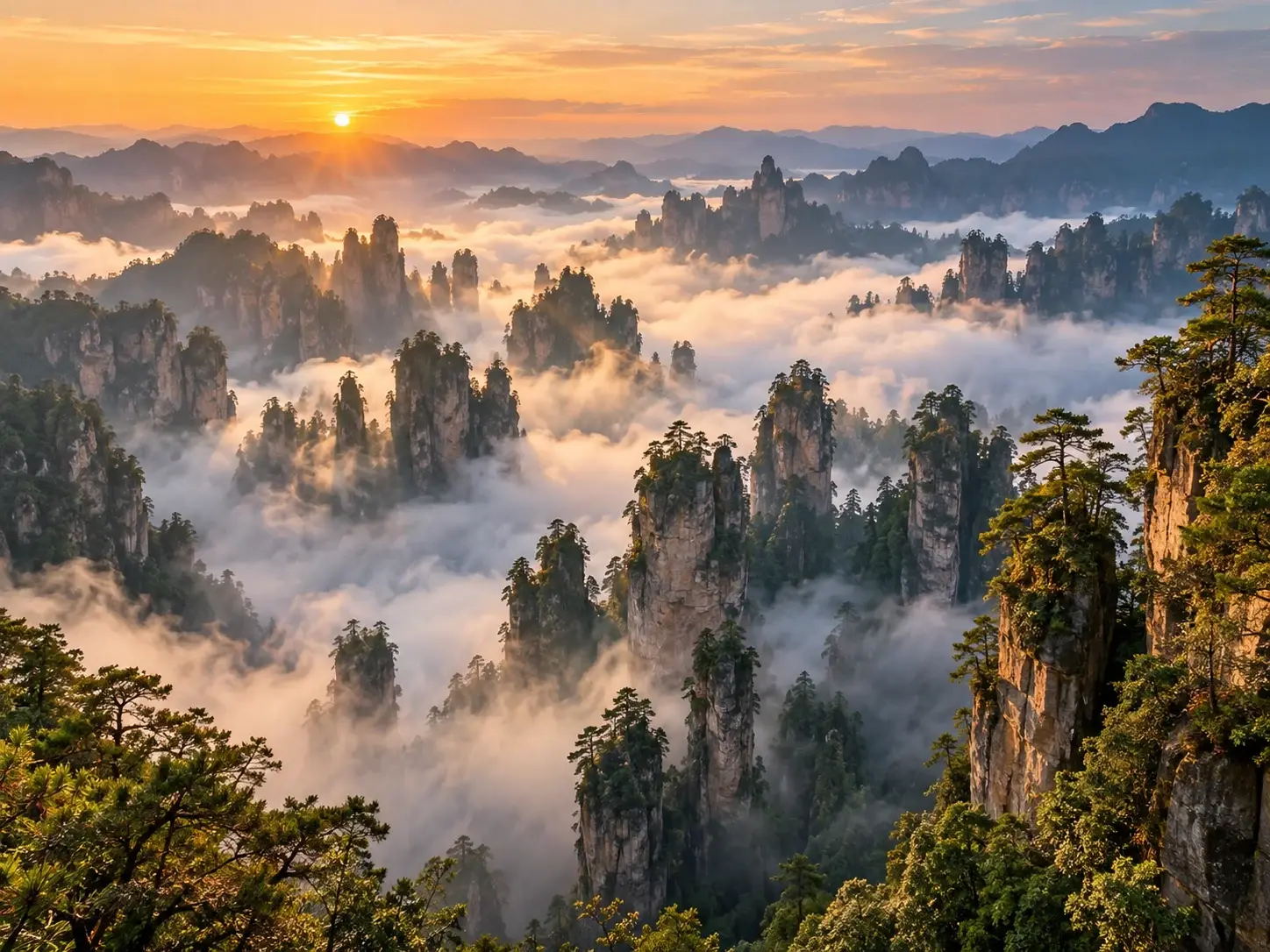
Towering columns of quartz sandstone rise into the clouds — Zhangjiajie’s most recognisable natural wonder.
Rows of peaks woven with mist at sunrise make one of the most visually stirring scenes in Chinese travel.
Beyond the strange peaks, gorges, streams, forests and walking trails form a complete ecological experience.
The Tianmen cableway, glass walkways, glass bridge and Bailong elevator give Zhangjiajie a spirit of adventure.
Stilted houses, song and dance, embroidery and silverwork of the Tujia and Miao add a deep human layer.
More than scenery itself, the most enchanting part is the Eastern poetry and mystery it reveals.
Three depths of discovery
Peaks, Clouds & the Sky Gate
First-time visitors / the essential first impression- National Forest Park & Yuanjiajie
- Tianzishan & Tianmen Mountain
The Pillar-Park at Scale
Lovers of landscapes, hiking & photography- Wulingyuan & the valley forests
- Bailong elevator viewpoints
Villages, Crafts & Glass Heights
Families, couples & adventure seekers- Tujia villages & handicrafts
- Glass bridge & high walkways
Four currents that shaped the Zhangjiajie soul
Wuling Mountain Ecology
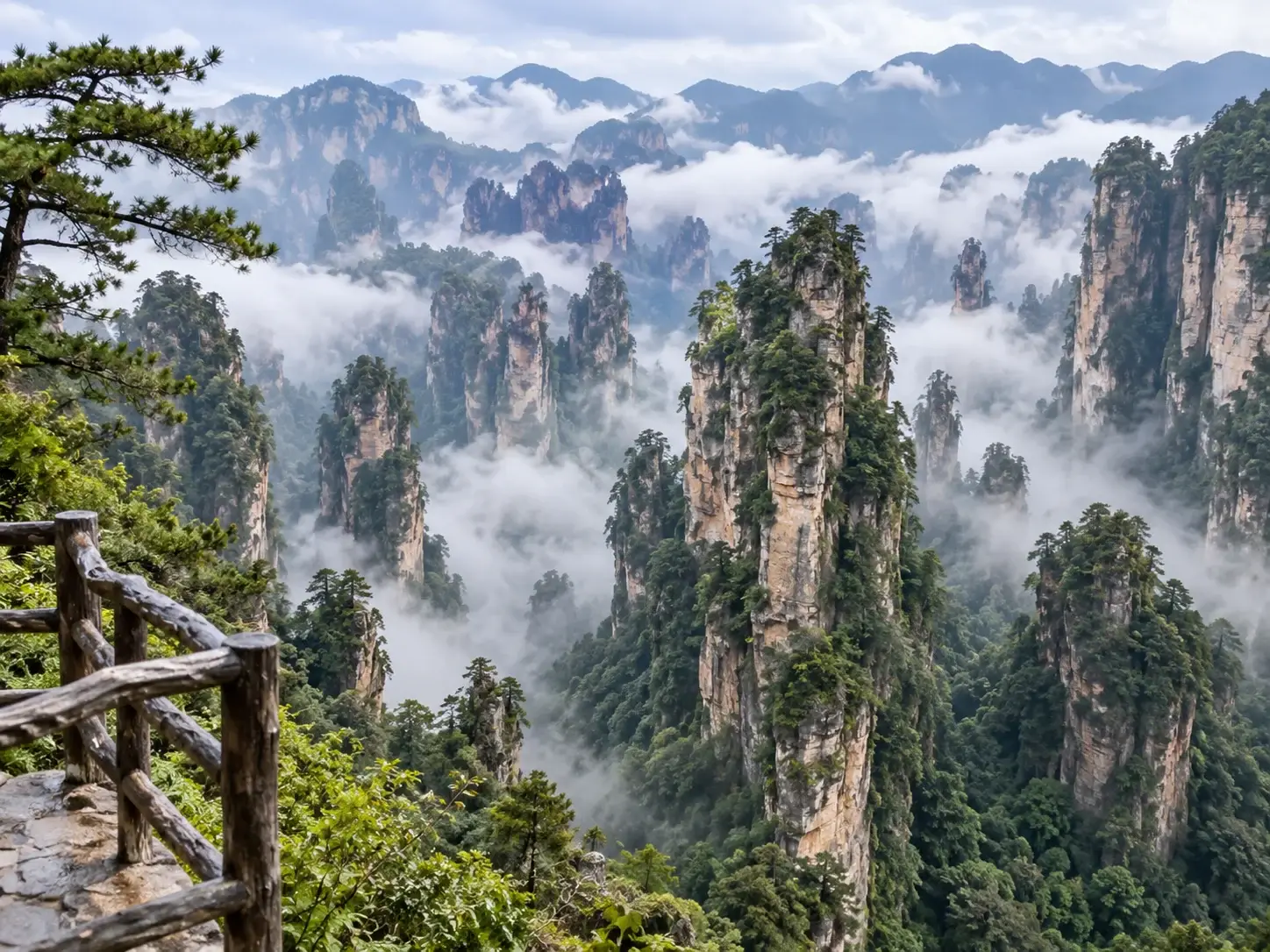
Zhangjiajie is an important part of the Wuling mountain range. Its rare quartz-sandstone pillar peaks, gorges, streams and primeval forests together form a world-class natural landscape. The mist-wrapped peaks are not only a geological wonder but a key image in the Chinese aesthetic of mountains and water.
Tujia & Xiangxi Ethnic Culture
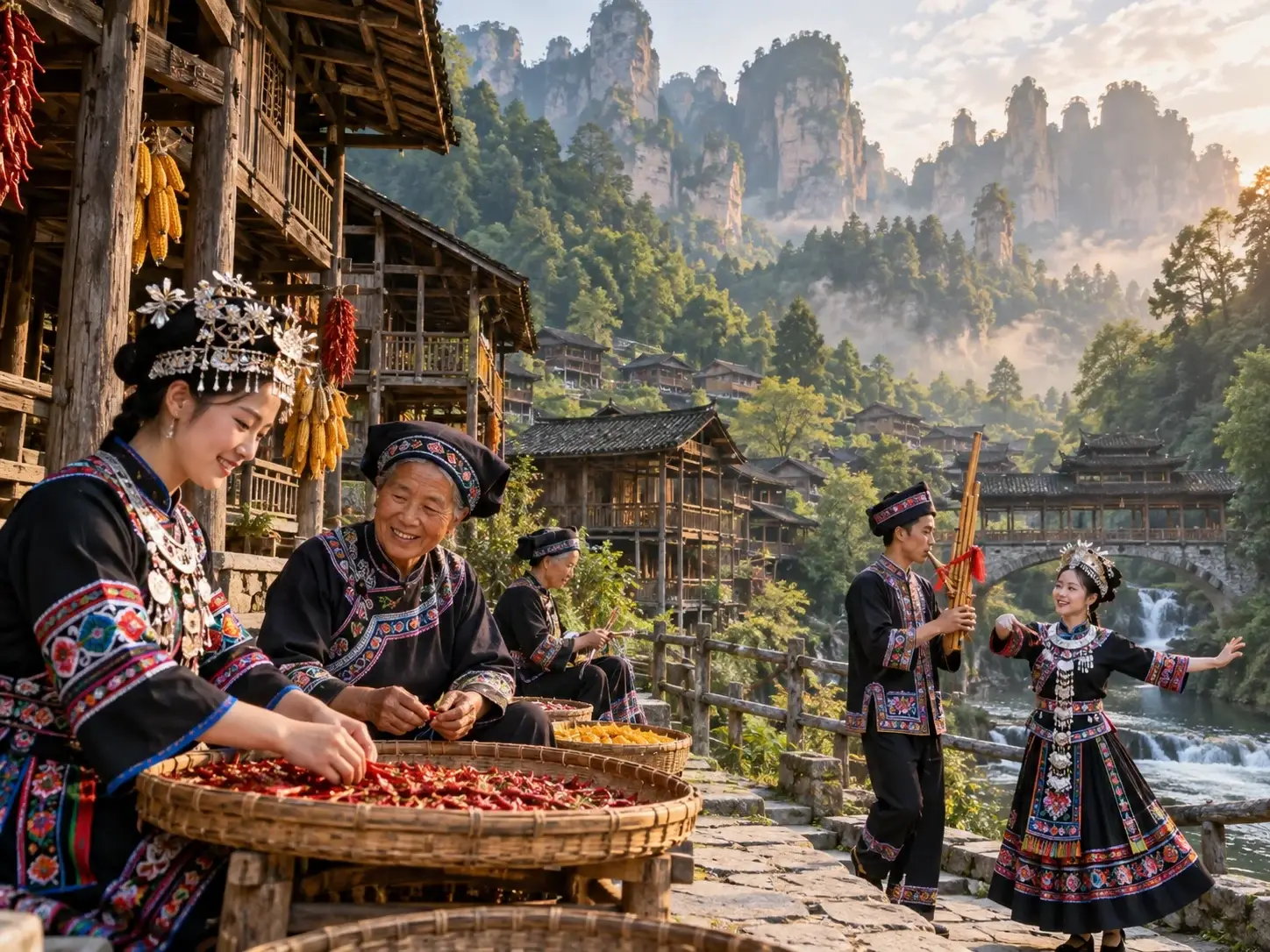
Zhangjiajie is also an important home of western Hunan’s ethnic cultures. The stilted villages, embroidery and silverwork, hand-waving dances and festival songs and dances of the Tujia and Miao add a vivid human layer to a city famed for nature.
Where Landscape Meets Humanity
Zhangjiajie’s most distinctive charm lies in the deep fusion of natural wonder with the Eastern human imagination. Pillar peaks, cloud seas, dawn mist and high mountain villages together form a painterly, almost surreal visual experience.
The Aesthetic Experience of Travel
To visit Zhangjiajie is not simply to “see sights” but to step inside a moving landscape scroll. Whether it is sunrise over Tianzishan or an ethnic village and a smoky dinner table in the valley, the city leaves an impression at once awe-inspiring and warm.
Where to begin
Six places carry the essential Zhangjiajie: the National Forest Park for the pillar-peak forest, Yuanjiajie for cliff-edge platforms, Tianzishan for dawn and a sea of cloud, Tianmen Mountain for the sky gate and high-altitude thrills, the Bailong elevator for an engineering marvel, and Wulingyuan for the landscape at its grandest scale.
Deep culture & mountain life
For travellers who want more than the six icons: the living Tujia culture of stilted mountain villages, and the quiet craft traditions of western Hunan — two experiences that reveal the warmth, skill and everyday texture of life in these mountains.
The contemporary & adventurous Zhangjiajie
Beyond traditional sightseeing, Zhangjiajie offers strikingly modern high-altitude experiences — the Grand Canyon glass bridge, canyon trails and photography routes — suited not only to admiring the scenery but to challenge, memory and immersive travel.
Mountains that feel mysterious yet warm
Simple, Spirited & Sociable
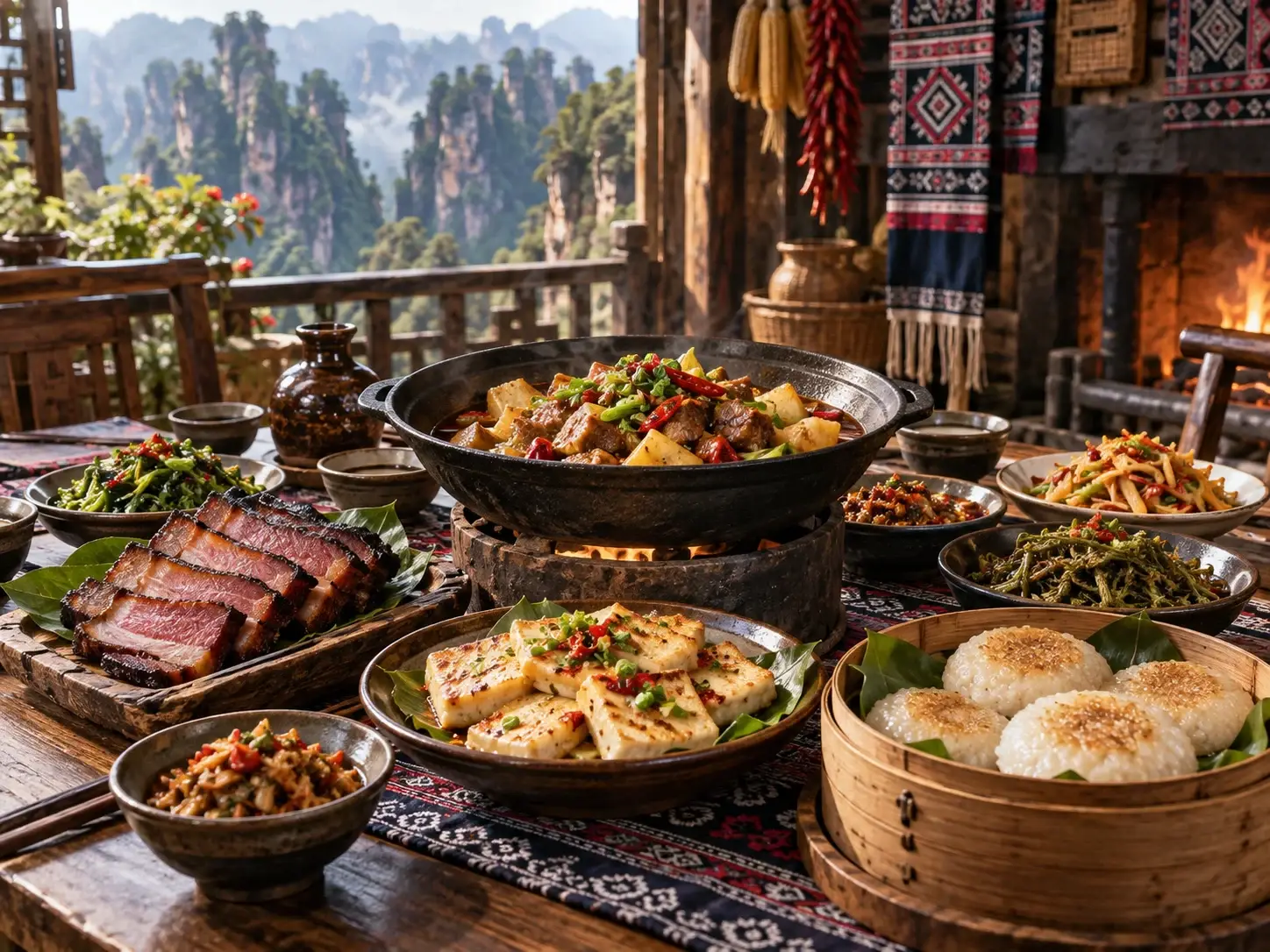
Zhangjiajie’s character is written into the mountain villages: strings of drying chillies and corn, neighbours chatting on wooden verandas, the sound of singing and reed pipes by the stream, and families gathered around a warm pot as the mist settles over the peaks.
Old Crafts, Old Rhythms
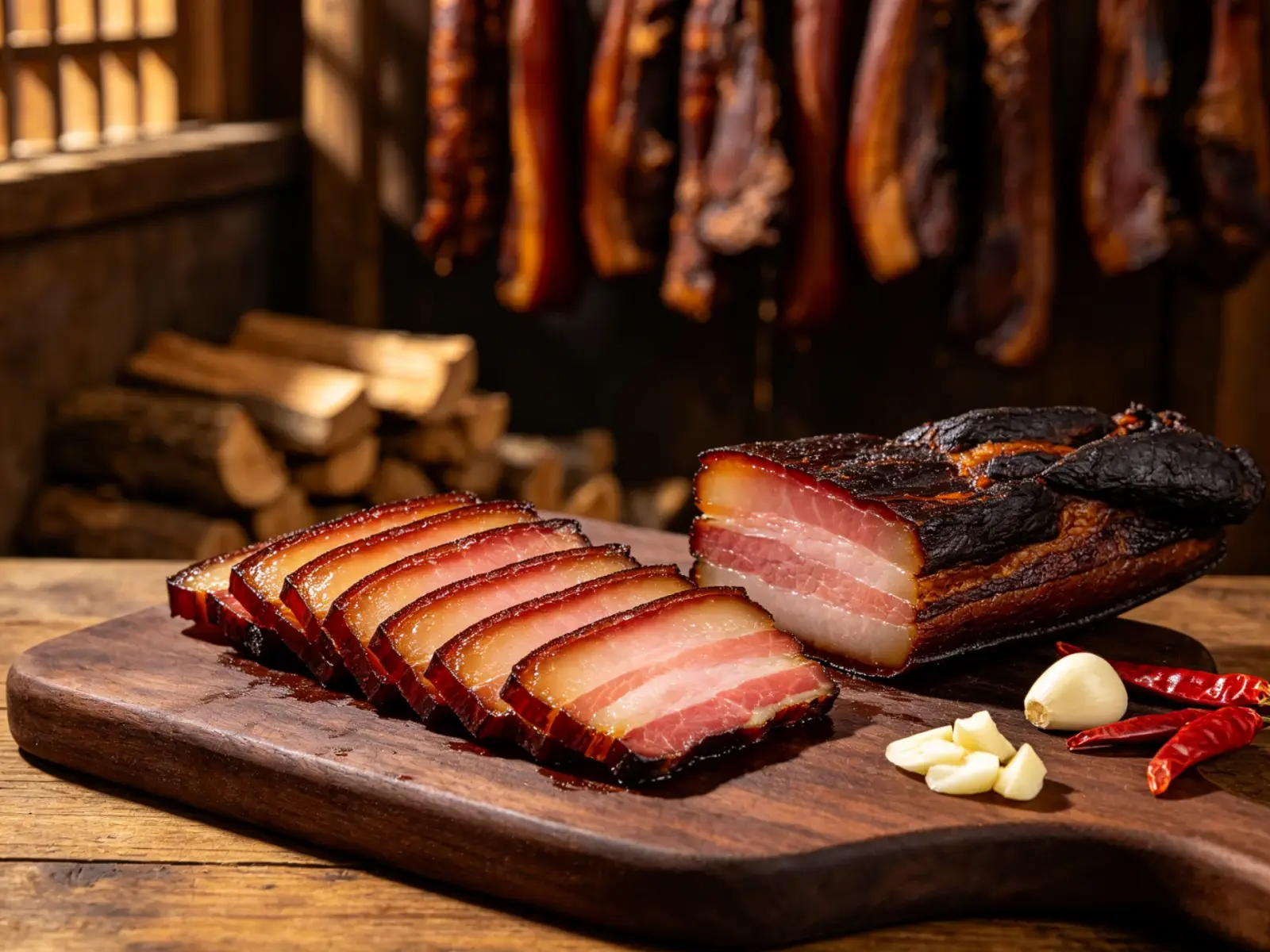
In the stilted houses, hands still embroider bright patterns and shape silver ornaments; in the kitchens, cured meats hang over slow fires. These quiet crafts give the mountain days a warmth older than the viewpoints.
Peaks as a Living Painting
Keep one open slot each day: an early start for sunrise and cloud, an unhurried afternoon among villages and crafts, and a long mountain dinner that lets the landscape become the journey itself.
Spicy, smoky & full of mountain warmth
Five signatures of the Xiangxi table
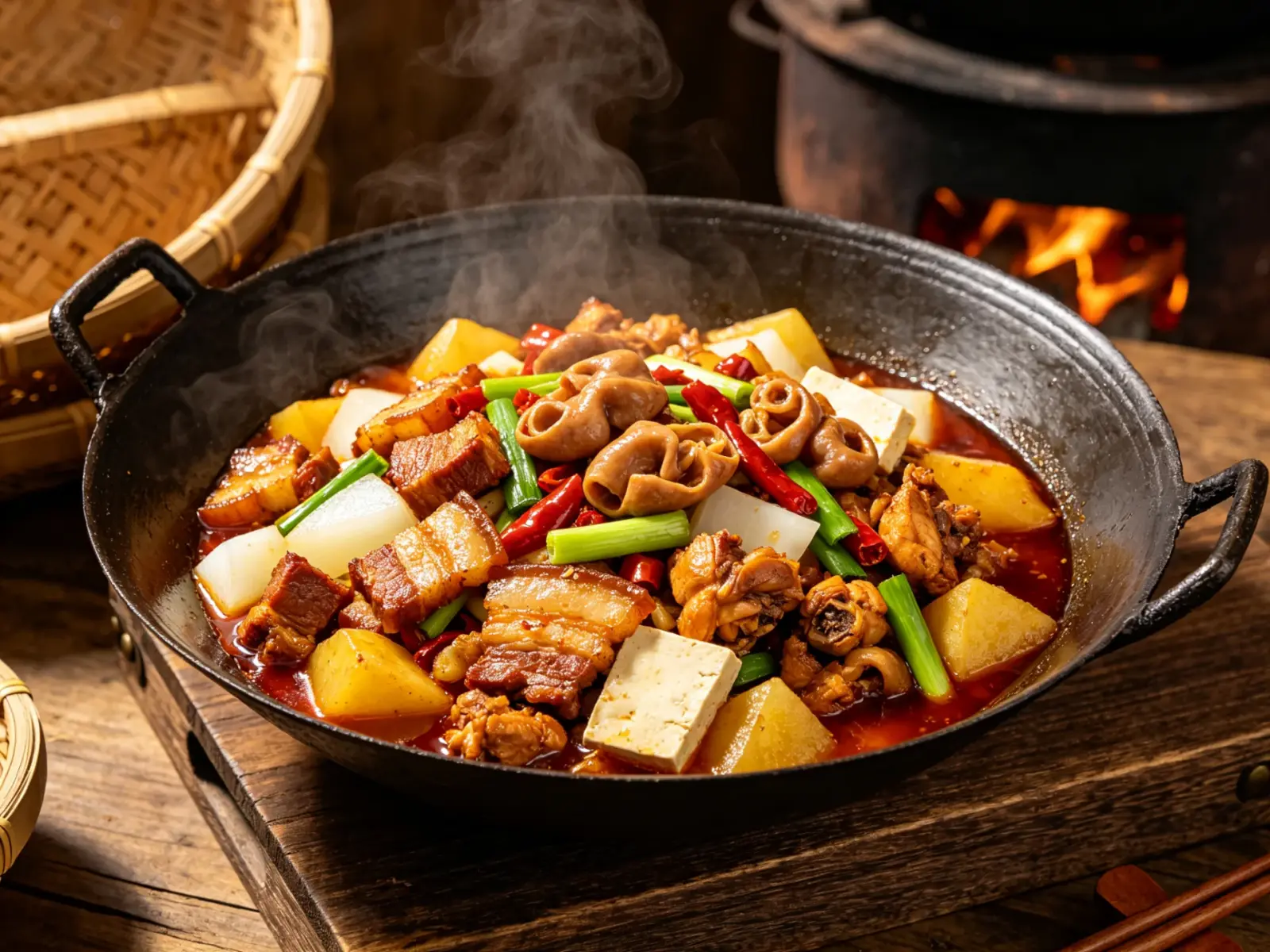
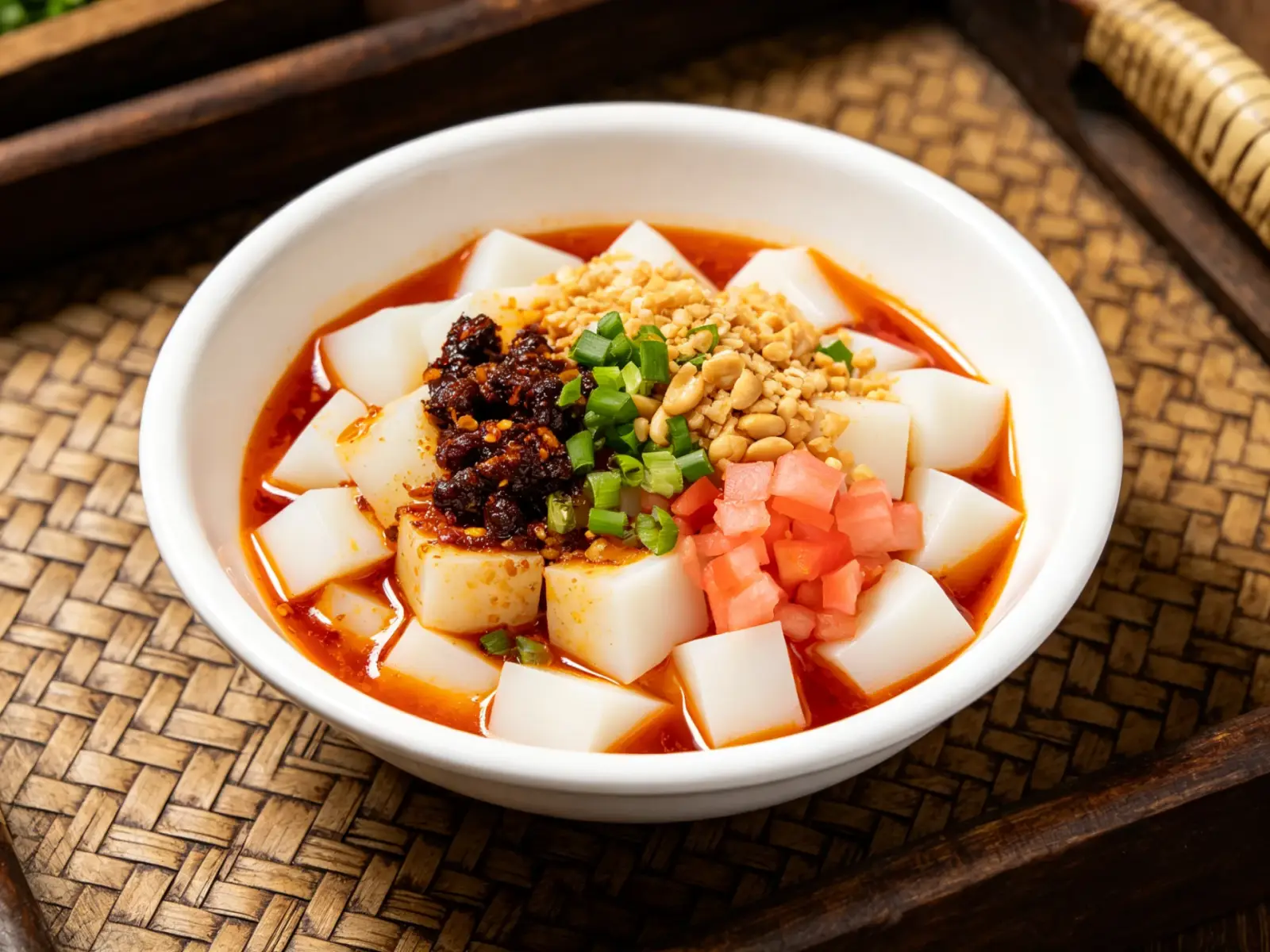
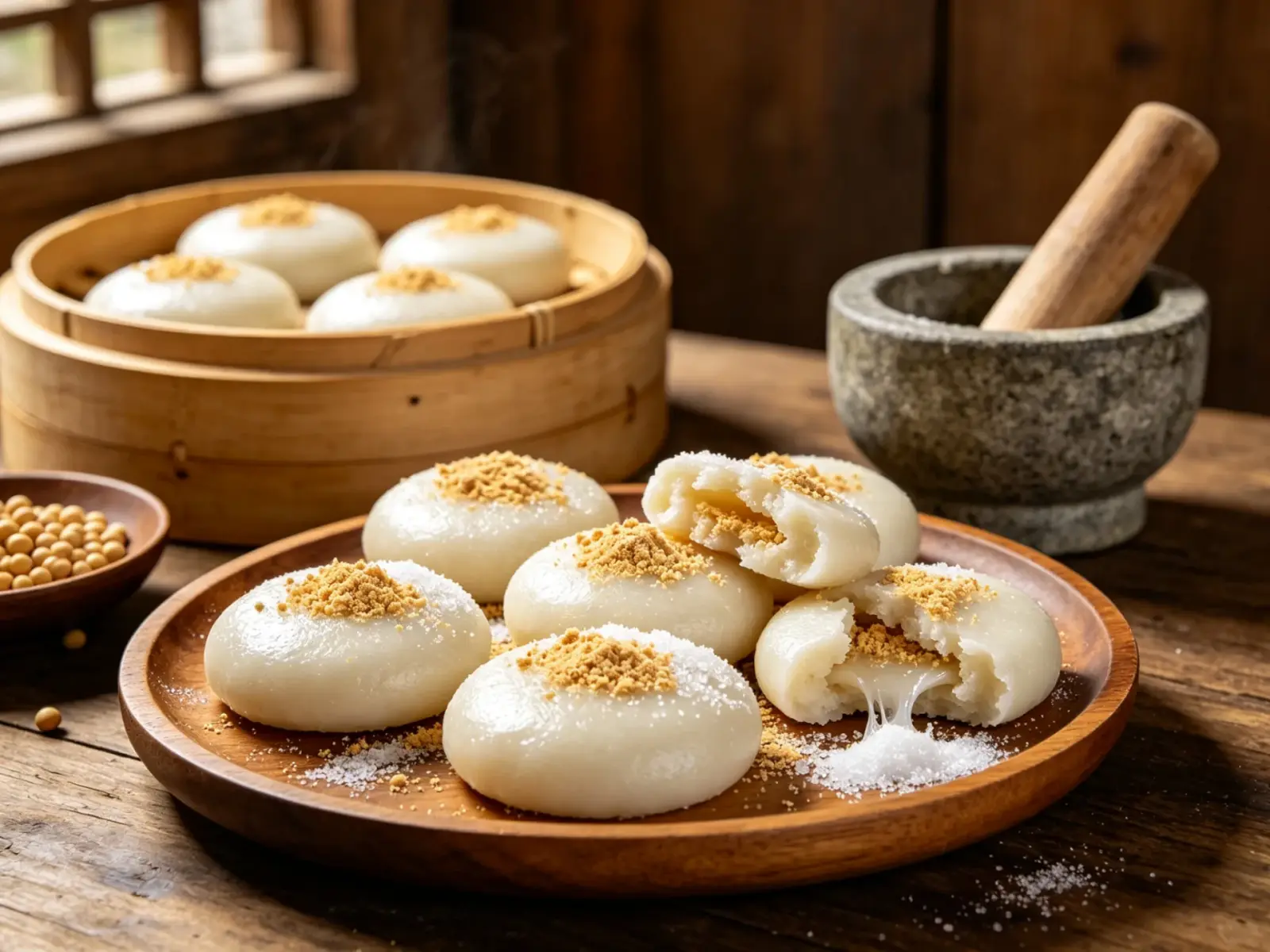
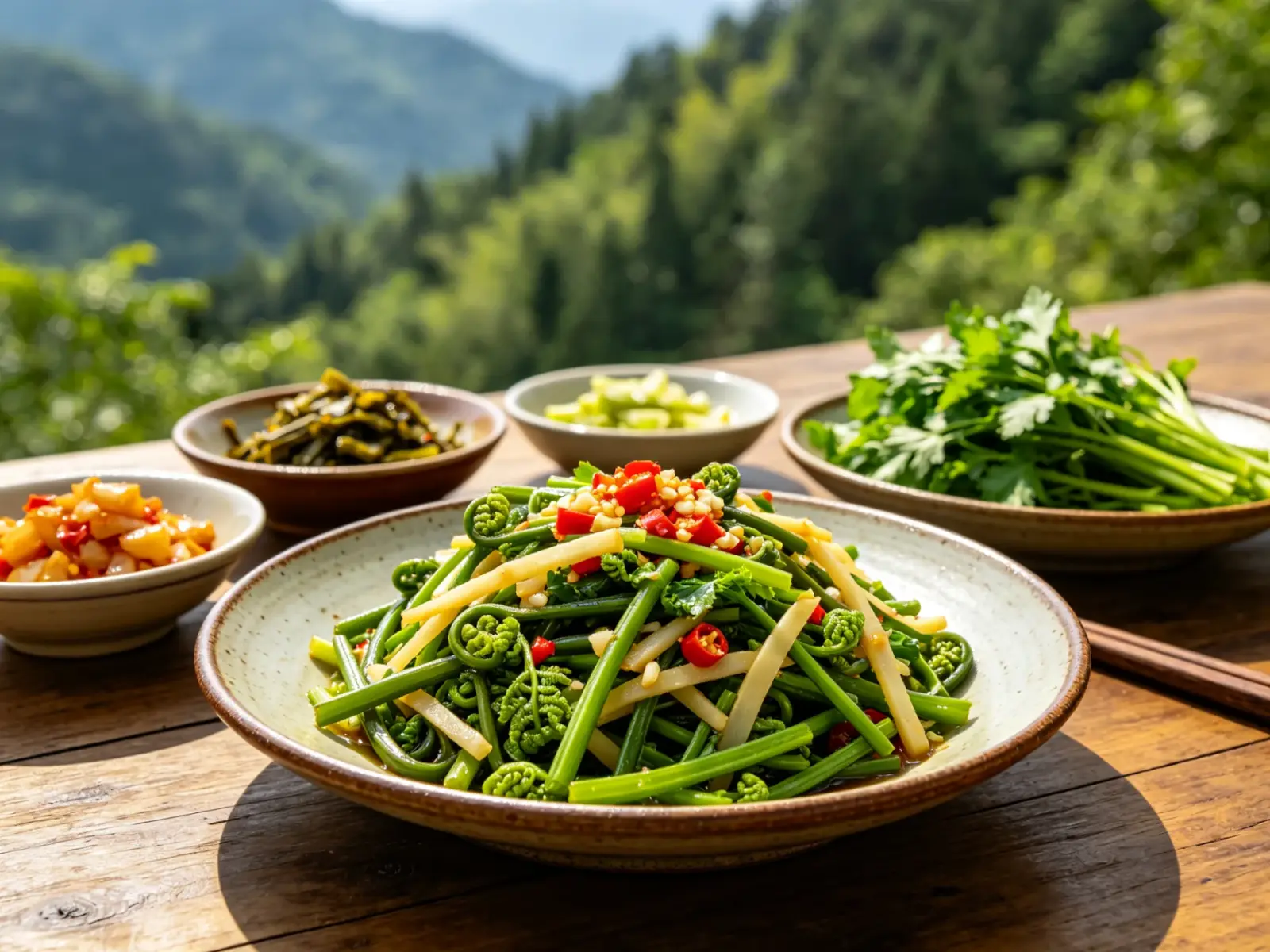
Zhangjiajie’s flavours carry the clear character of the western Hunan mountains — spicy, fragrant, hearty and warm, with the simple honesty of village life. A hot pot, cured meats, rice tofu, glutinous cakes and wild greens together form a travel memory full of hearth and home. For visitors, the food is not only a taste but the most direct way into mountain life and ethnic hospitality.
A balanced day of mountain food
Begin with soft rice tofu and a warm local snack.
Cured meat, wild greens and simple stir-fries.
Glutinous cakes and hot tea after the trails.
A long sanguoxia meal around the village fire.
The ideal trio is one classic sanguoxia hot pot, one village mountain dinner and one round of local snacks — together they reveal the region’s wild freshness and ethnic warmth.
Plan by season, dress for the heights
Best Season
Autumn (September to November) is ideal — clear air, comfortable weather and the best chance of cloud seas after rain. Spring (April to May) is mild and green; summer is warm with mist and occasional storms, best for adventure; winter is cold and quiet, with rare snowy peaks and fewer crowds.
Getting There
Zhangjiajie Hehua International Airport and Zhangjiajie West railway station connect the city widely, with high-speed trains from Changsha and beyond. Scenic areas are reached by shuttle buses and cableways; inside the parks, eco-buses, cable cars, elevators and walking trails link the viewpoints.
Where to Stay
Stay near Wulingyuan for easy, multi-day access to the pillar peaks and the park gates; choose a Tujia village guesthouse for stilted-house atmosphere and local meals, or central Zhangjiajie city for transport, Tianmen Mountain and a wider choice of restaurants.
Daily Rhythm
Start before dawn for sunrise platforms and cloud seas, use the middle hours for valleys, forests and villages, and reserve late afternoon for golden light over the peaks. Mist and weather change quickly, so build flexible time into every day.
Walking & Safety
Wear grippy, comfortable shoes for steep and sometimes slippery steps, and carry a light layer and rain jacket for the heights. On glass walkways and bridges, follow capacity and weather rules; high winds or storms may close them temporarily.
Families & Adventure
Cableways, elevators and glass bridges suit families and first-time visitors, while longer ridge trails and cliff paths reward hikers. Pace the trip with slow viewpoints and a village evening so the grandeur feels exciting rather than exhausting.
Five ways to shape the journey
Zhangjiajie is neither merely a collection of spectacular natural scenic areas nor a patchwork of famous photo spots. Its true charm lies in the layered whole formed by pillar peaks and cloud seas, valley forests, high-altitude adventure, ethnic culture and the warmth of mountain life. For international visitors, the best way to travel is not to rush from one platform to the next, but to give these mountains enough time — for a sunrise above the clouds, for a meal around a village fire, and for the mist over the peaks to become the journey itself. 奇峰云海张家界,山水秘境等你来。
Start Your Journey