
Guilin
GuilinA Living Chinese Landscape Painting
Six windows into Guilin’s layers
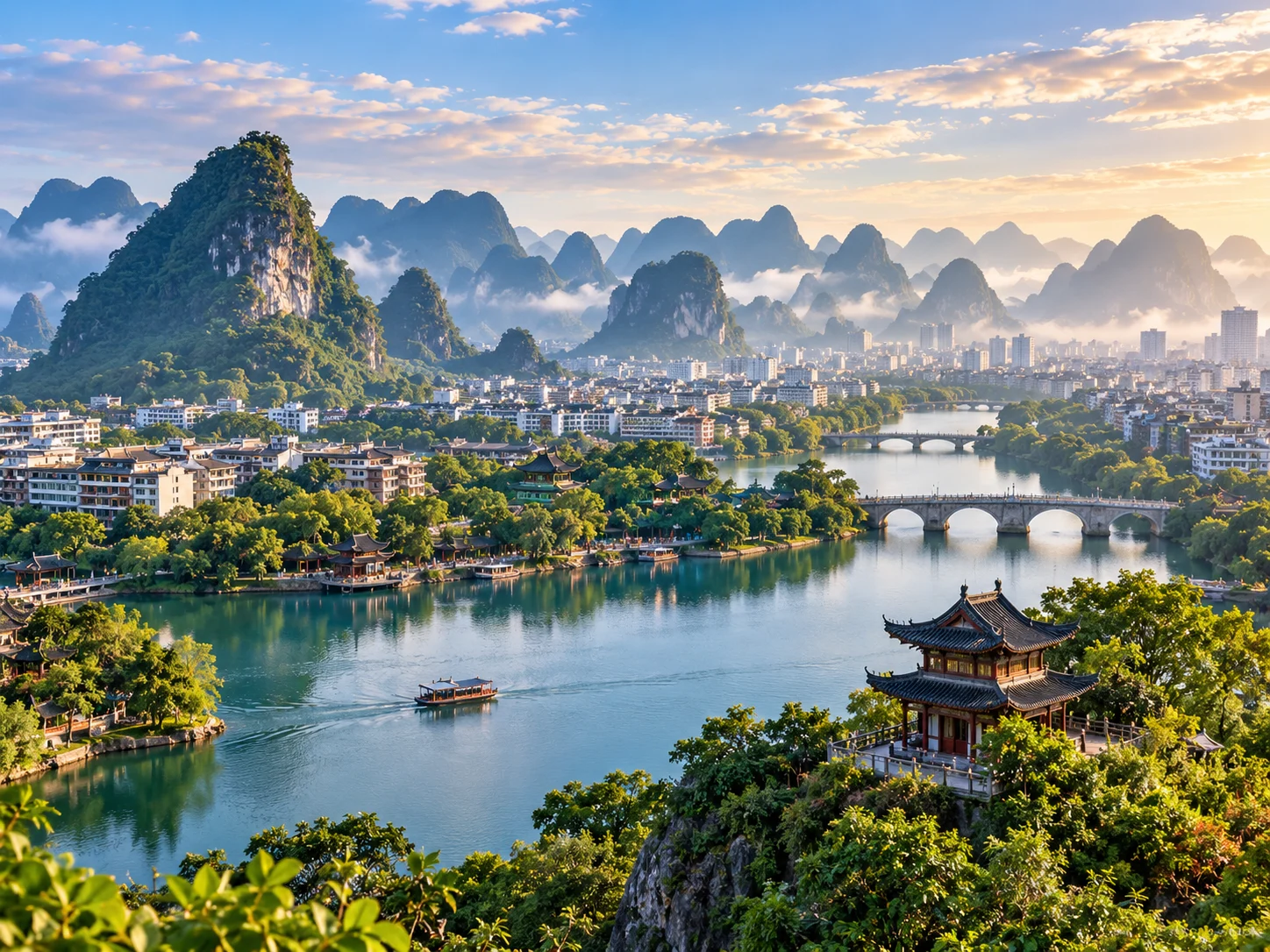
Guilin is not a single scenic spot but an entire landscape you can “enter”: boat through karst peaks, cycle through rice fields, walk into old towns, cruise the lakes at night, then return to everyday life with a bowl of rice noodles.
Six cultural keywords worth collecting
Guilin’s core natural identity and the first entry point for understanding its “landscape under heaven” reputation.
The region that most naturally combines river valleys, cycling, villages and outdoor experience.
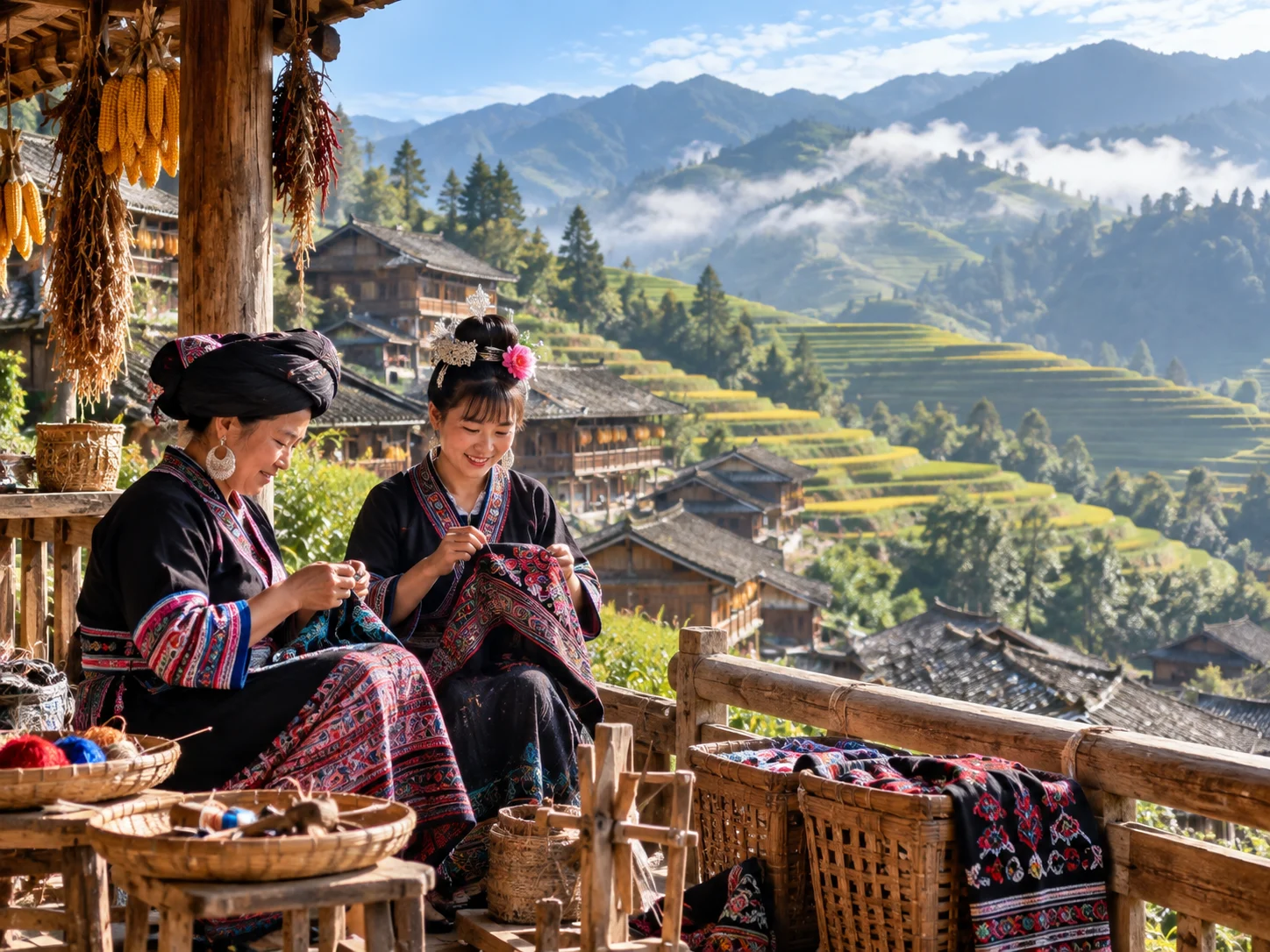
Agricultural wisdom, ethnic villages and four-season mountain landscape in one layered scene.
A natural arch and hill shaped like a giant elephant drinking from the river — Guilin’s classic city symbol.
Stalactites, stalagmites and underground water scenes extend Guilin’s karst world beneath the surface.
A city water system that reveals another layer of Guilin’s landscape after dark, with pagodas, bridges and reflections.
Three depths of discovery
Classic Landscape
First-time visitors / photography- Li River & Xingping
- Yangshuo & Yulong River
Mountain & Ethnic
Longji terraces & Zhuang/Yao villages- Longji Rice Terraces
- Ethnic Villages & Crafts
City & Night Tour
Elephant Trunk Hill, old street, lakes- Elephant Trunk Hill
- Two Rivers & Four Lakes
Three currents that shaped the landscape soul
City & Landscape Growing Together
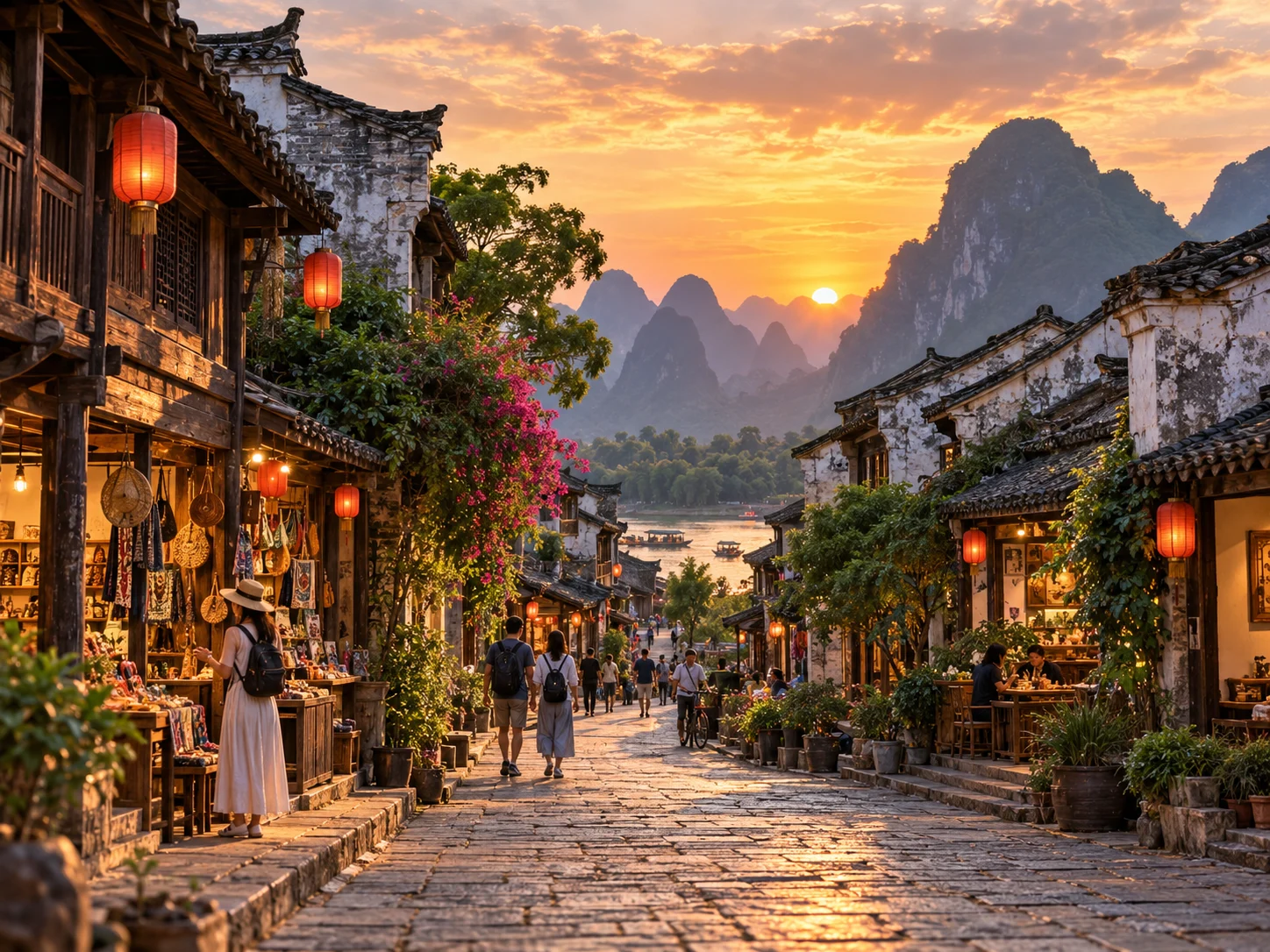
Guilin’s cultural expression has long been closely tied to its natural space. The city does not isolate the landscape inside scenic areas — peaks, rivers, lakes, bridges and streets all enter daily life. This “city within scenery, scenery within city” relationship is Guilin’s most important local character.
Old Towns, River Transport & Local Life
Settlements along the Li River such as Daxu Old Town preserve traces of traditional river transport, commerce and street life. Stone-paved roads, wooden shopfronts, old wharves and waterside spaces help visitors understand the layers of life beyond Guilin’s landscape.
Multi-Ethnic Culture
In northern Guangxi around Longsheng, Zhuang and Yao ethnic groups have long lived in the mountains. Costumes, embroidery, wooden stilt houses, festivals and terrace farming give Guilin’s cultural landscape a distinct human identity beyond its natural scenery.
Where to begin
Four places that carry the essential Guilin: the Li River where karst peaks meet the water, Yangshuo and the Yulong River for countryside calm, the Longji Rice Terraces for mountain agriculture, and Elephant Trunk Hill as the city’s most recognisable symbol.
Beyond the classic postcards
For travellers who want more than the four icons: the underground karst world of Reed Flute Cave, the Zhuang and Yao mountain villages, the illuminated Two Rivers & Four Lakes night tour, and the historic streets of Xingping old town.
Enter the landscape & contemporary Guilin
The most suitable way to travel Guilin is to move from “viewing scenery” to “entering scenery”: cycling the Ten-Mile Gallery, drifting on a bamboo raft, tasting local rice noodles, and slowing down in the countryside.
A landscape of everyday warmth
City in the Landscape
Guilin’s charm is not only in its scenic areas. Peaks, rivers, lakes and bridges enter daily life — a bowl of noodles by the river, a walk along the lake, and the sight of karst hills from a restaurant window are all part of the city’s character.
Old Towns & River Life
Stone-paved streets, wooden shopfronts and old wharves along the Li River preserve the memory of water transport and commerce. Walking through Xingping or Daxu at dusk lets you feel the life behind the landscape.
How to Plan the Slow Hours
Leave one “blank slot” each day: let the mist lift, let a bamboo raft pass slowly, let the cycling road get a little longer, and let a bowl of noodles and a sunset become part of the journey.
Rice noodles, river fish & mountain tea
Four families of local taste
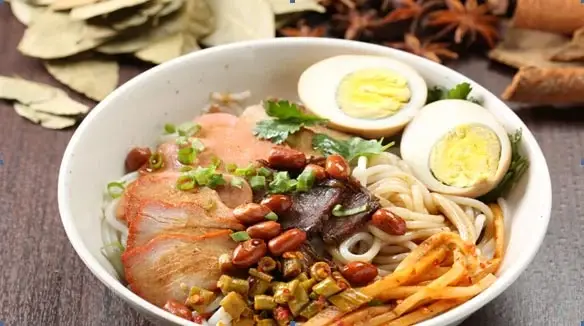
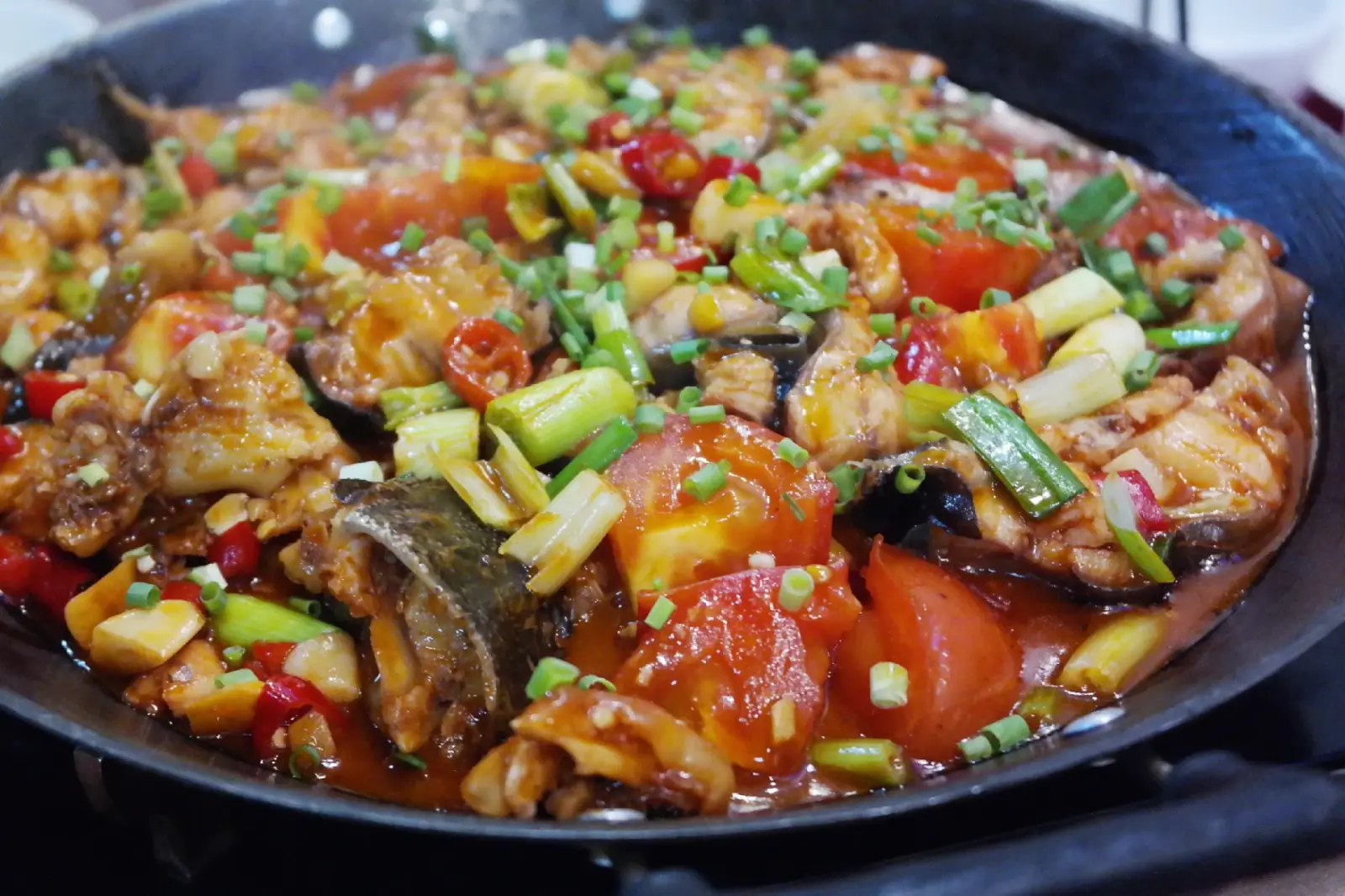
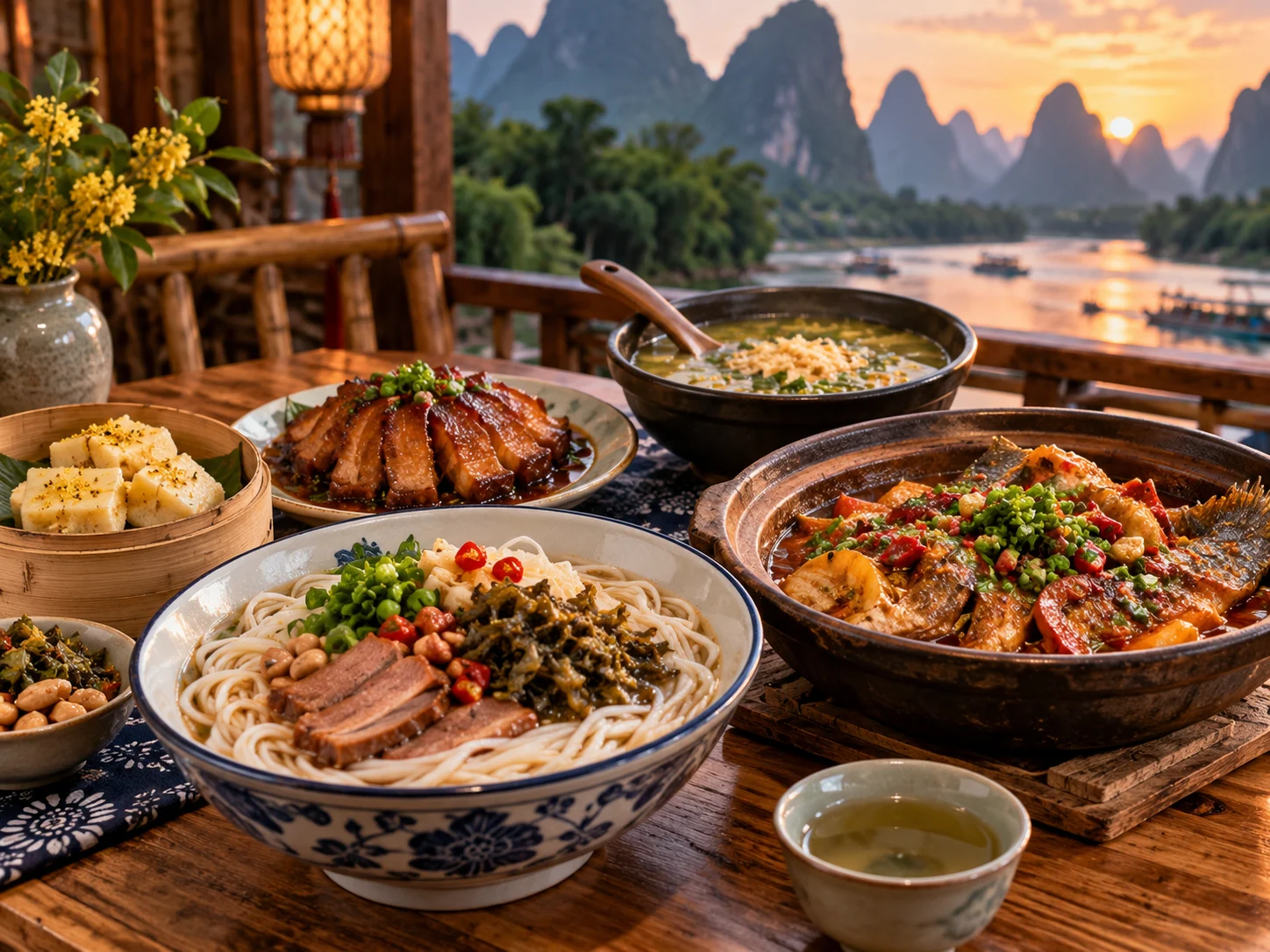
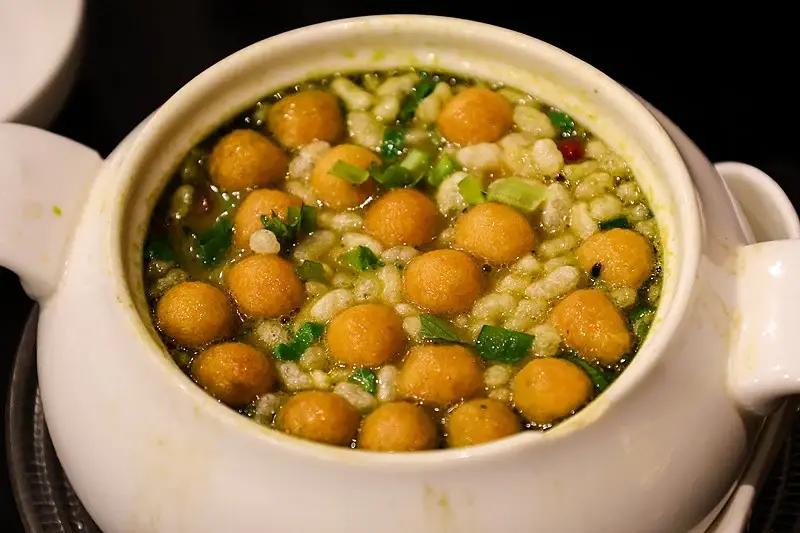
Guilin cuisine has the lightness of Guangxi rice-noodle culture as well as more distinctive local flavours such as Yangshuo beer fish, Lipu taro pork and Gongcheng oil tea. Rather than a list of “grand dishes”, Guilin food is best experienced through breakfast, small shops and a home-style meal by the landscape.
A balanced day of Guilin food
Start the day the local way: a bowl of lu cai fen with braised pork, peanuts and pickled vegetables.
Choose a full lunch: beer fish, taro pork or other classic northern Guangxi dishes.
Wander Yangshuo West Street or the riverbank, picking one or two snacks at a time.
Finish with Gongcheng oil tea and snacks, or a Two Rivers & Four Lakes night cruise.
Do not “ticket-stamp” too many dishes at once. Walk slowly through the old streets, choose one or two items each time, and leave room for a proper riverside meal.
Plan by season, move by landscape
Best Season
Spring and autumn are best for landscape travel. Spring has abundant water and more mist; autumn has stable weather and high visibility. Summer is hot and rainy; winter has fewer visitors and a quieter rhythm.
Transport
Guilin city has high-speed rail and an airport; Yangshuo connects by high-speed rail, bus and tourist shuttles. The city centre suits a mix of walking, ride-hailing and public transport.
Where to Stay
For a first visit, stay near the lake district or Li River in the city. For countryside and outdoor experience, stay 2 nights in Yangshuo. Longji Terraces suit 1 night for morning mist and sunset.
Travel Rhythm
Guilin does not suit an over-packed schedule. The Li River, Yangshuo and Longji all need time left for weather changes and slow wandering.
Photography Tips
Early morning suits river mist and terrace cloud seas; evening suits the Li River, Elephant Trunk Hill and Yangshuo peaks; blue hour is best for the Two Rivers & Four Lakes.
Slow Travel Philosophy
Give the landscape time: let the mist lift, let a bamboo raft pass slowly, let the cycling road get longer, and let a bowl of noodles and a sunset become part of the journey.
Four ways to walk the landscape
Guilin is not a place to “finish seeing” — it is a landscape scroll you can walk into. The truly suitable way to travel is not adding more sights, but giving the landscape enough time: for the mist to lift, for a raft to drift by, for the cycling road to lengthen, and for a bowl of noodles and a sunset to become the journey. 山水有相逢,桂林等你来。
Start Your Journey